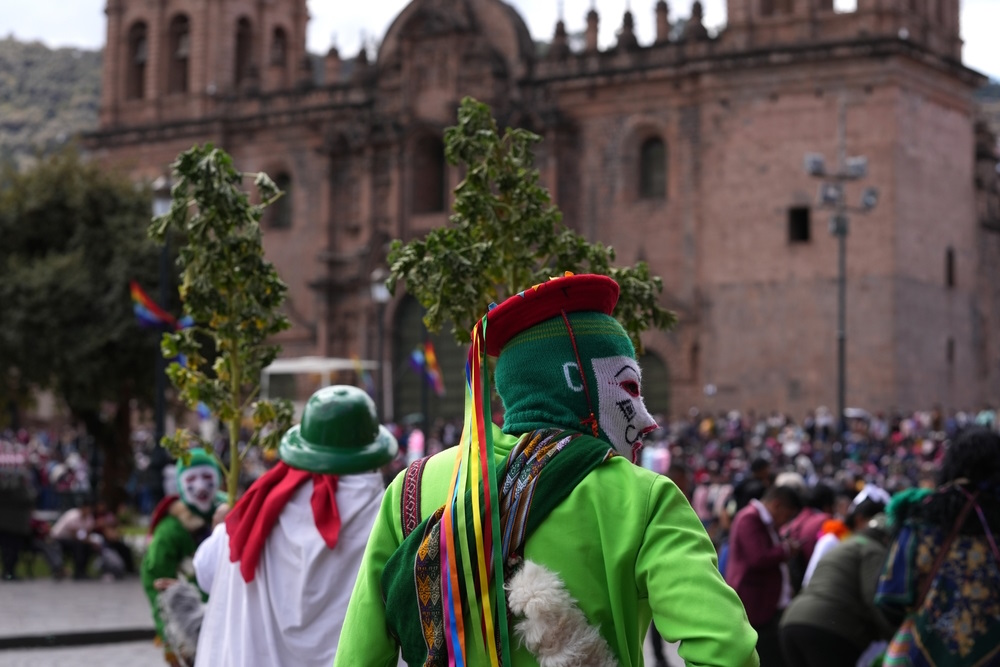
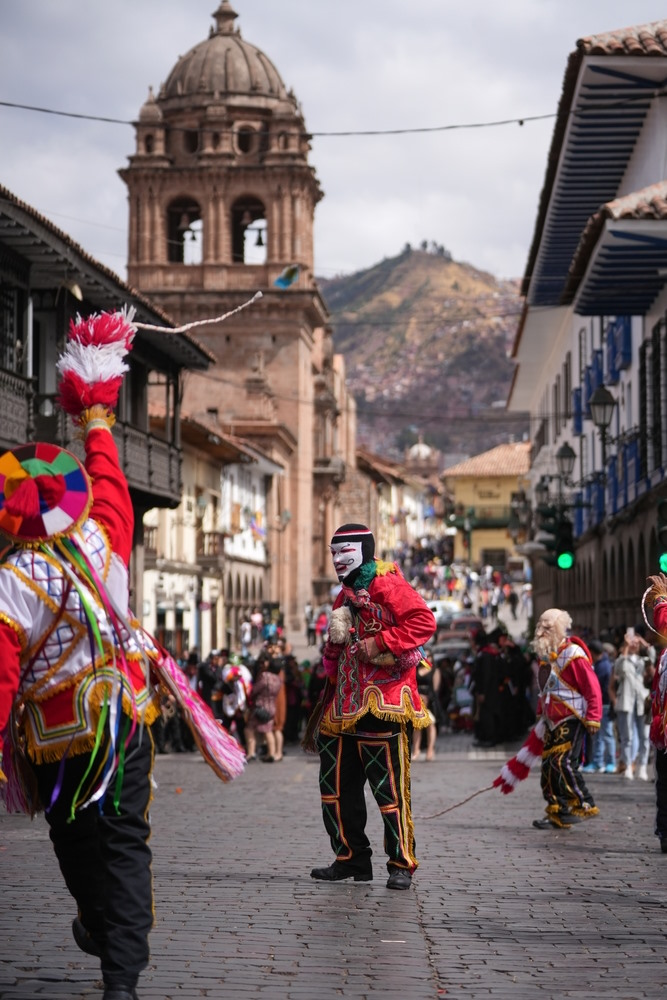
Celebrated annually on June 24, Inti Raymi (in the indigenous Quechua language), the Festival of the Sun, is an Incan festival that honours Inti, the sun god and marks the winter solstice, and the Andean New Year. Taking place in Cusco, the city that was once the heart of the Incan Empire, today it is South America’s second-largest festival and one of the top things to do in Peru, attracting visitors from around the world to experience a colourful and cultural spectacle.
What is Inti Raymi?
In the 1400s, the Incan Emperor Pachacutec (of Machu Picchu fame) introduced a festival around the winter solstice, the shortest day of the year, to pray to Inti, the most venerated god of the Incan religion, for the sun’s return and to give thanks for the harvest and petition for a prosperous future harvest. The celebration was thought to last nine days, and was filled with dances and colourful processions, as well as animal sacrifices to Pachamama (mother goddess) to ensure a good harvest. With the arrival of the Spanish in Peru in 1530, the celebration was banned – the last Inti Raymi with an Incan Emperor was in 1535.
It was revived in 1944, as a grand cultural reenactment, based on the writings of Inca Garcilaso de la Vega, a colonial chronicler and writer who was born to a conquistador and an Inca noblewoman. Split across three locations in Cusco, it features up to 800 local actors and performers who dress in vibrant traditional clothing, all playing a part in recreating Inti Raymi’s sacred rituals.
Why is Inti Raymi celebrated today?
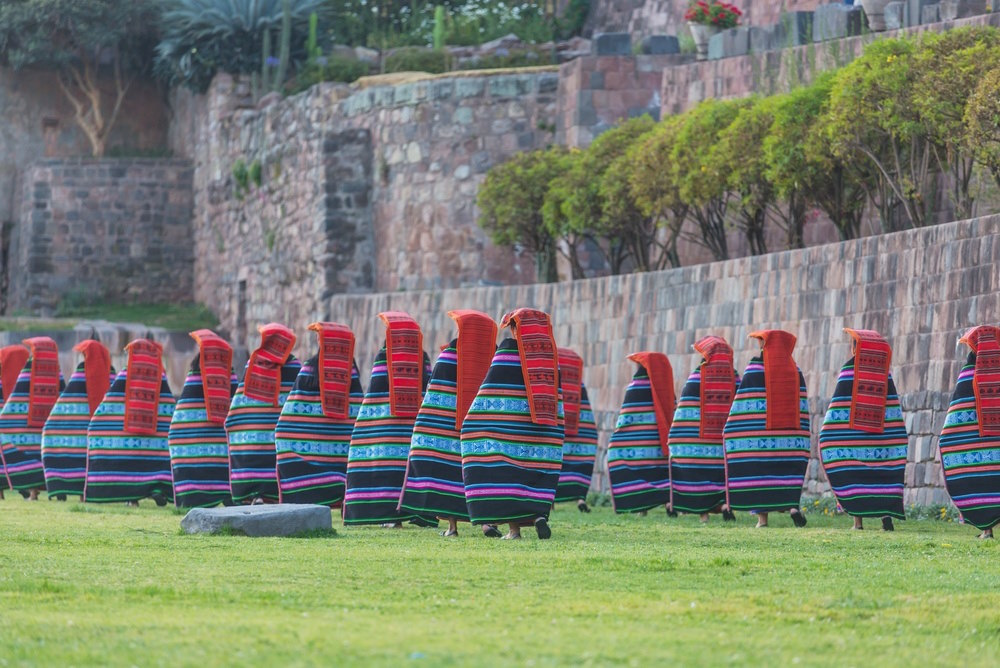
The revival of Inti Raymi in 1944 came about after a group of Cusqueño intellects and artists, led by Quechua writer Faustino Espinoza Navarro, sought a way to restore indigenous pride to the people of Cusco and honour local heritage and identity after 400 years of suppression by colonial rule. The annual reenactment of this traditional religious ceremony has successfully brought long buried indigenous roots back into the open, has been declared a Cultural Patrimony of the Nation, and become one of the top things to do when exploring Peru.
What happens at Inti Raymi?
On the 24 June, the Inti Raymi celebration unfolds in three stages, at three different locations.
The first ceremony takes place at 9am at Korikancha (Temple of the Sun), the foundations of which are under the Church and Convent of Santo Domingo, a place that was the primary spot for sun worship in Inca era Cusco. Here the Sapa Inca (emperor) will perform the initial invocation and greeting to the sun, before the imperial retinue parades along Loreto Street towards the main square.
The second stage of Inti Raymi takes place at 11am in the Main Square – Haukaypata to the Inca, the Plaza de Armas to the Spanish. Here, a colourful public meeting takes place with the Incan retinue meeting with the city mayor, representatives from the City Council and provincial and national leaders. An exchange of ‘khipu’ (recording keeping devices made from knotted cord) take place and the Sapa Inca and the mayor exchange words.
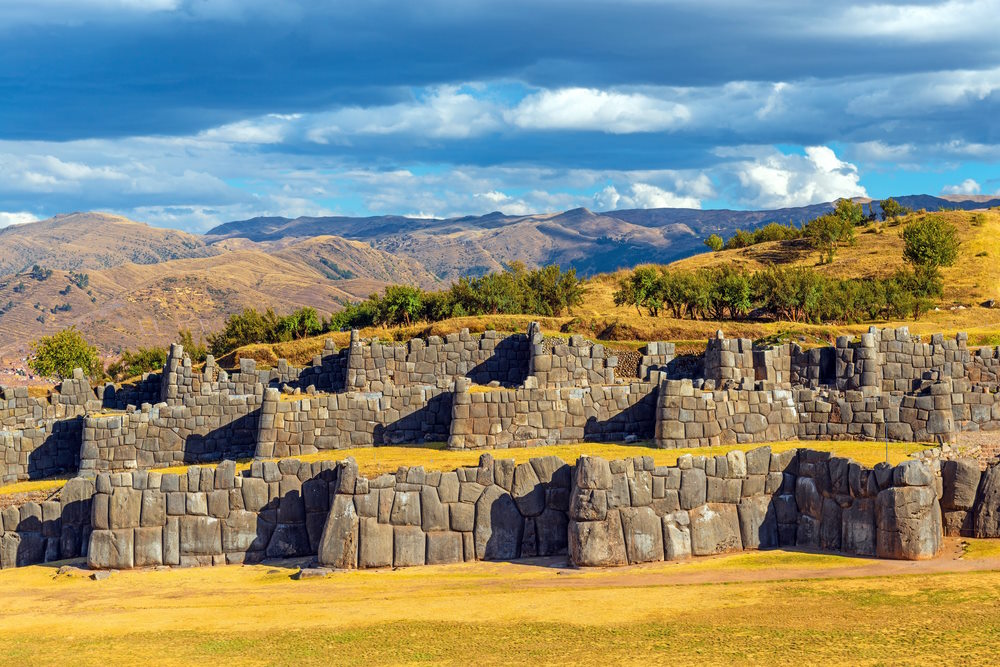
The third stage takes place from 1.30pm at Sacsayhuaman, the ruins of an Incan fortress that overlooks the city. This is the grand finale, packed with musical performances, processions and traditional blessings. It is here that you’ll see the 800 plus local performers in their traditional attire, taking part in ceremonies such as the ‘Rite of the Chicha’ (a drink made from corn, maize and other wild plants), the Rite of the Incan Sacred Fire and the Llama’s sacrifice (a reenactment) as well as plenty of traditional pre-Hispanic dances, and much more.
Where is the best place to experience Inti Raymi?
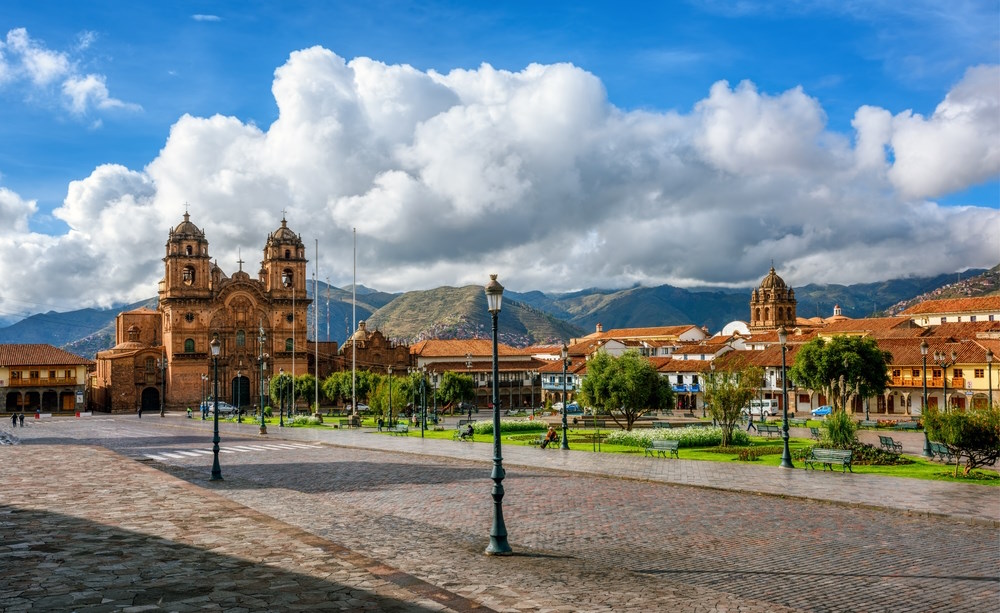
While small Inti Raymi celebrations happen throughout the indigenous communities of the Andes, you’ll only get to see the full reenactment in Cusco, the city known as ‘the naval of the world’ during the Incan Empire.
Exploring Cusco, along with UNESCO-listed Machu Picchu, is one of the most popular things to do in Peru, offering a fascinating insight into how rich the Incan culture was as well as the blending of an indigenous culture with a conquering one. Alongside Incan ruins and grand colonial architecture, all set in spectacular Andean scenery, the city has a vibrant artists’ district full of local shops and galleries, a busy market that gives a glorious snapshot of local life – and is the best place to get hold of traditional crafts – and excellent Peruvian cuisine, from Andean heritage cooking to contemporary culinary hotspots.
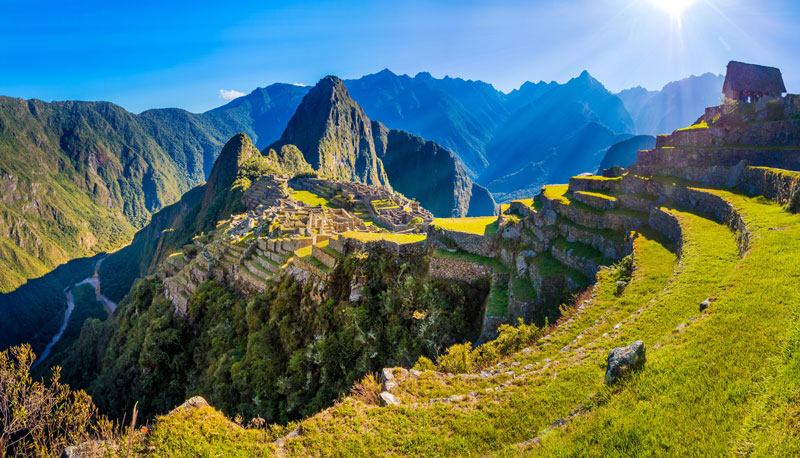
Cusco, though, is perhaps best known as the gateway to the Sacred Valley and Machu Picchu. Travel by road into the Sacred Valley to visit vibrant mountain towns like Pisac and Ollantaytambo, hubs of indigenous culture, and the agricultural terraces and Incan ruins that lay scattered across the region. You can reach Machu Picchu by road or by train, arriving in the town of Aguas Calientes before taking Carretera Hiram Bingham (Hiram Bingham Highway) to ascend to the citadel. Machu Picchu itself needs little introduction, its numerous 15th-century structures and terraces so iconic.
We have included the Inti Raymi in June departures of Panoramic Peru, a tour already packed with the top things to see in Peru. This special edition of the tour includes reserved seating for the best views of the action, perfectly sandwiched between a day exploring the treasures of Cusco and the spectacular train journey across the altiplano to the shores of Lake Titicaca.

Panoramic Peru
14 days from £5990pp
Fully Inclusive of Tour & Flights
Admire preserved Incan houses in Ollantaytambo - Admire Machu Picchu - Tour Cusco - Cross Lake Titicaca - Visit the remove Maca & Yanque villages