For many travellers, Japan sits right at the top of the wish list. It has everything: buzzing cities, ancient temples, bullet trains, mountain scenery, exceptional food and the ability to make even a convenience store feel exciting.
With so much to see, the hardest part is usually deciding where to begin. We asked our Senior Product Manager, Sky, to share her top tips, favourite places and answers to some of the questions she hears most often.
Over to you, Sky…
Sky’s Top Tips
Go with a guide
Japanese people are famously helpful, and travelling with a guide adds another layer entirely. Whether you’re taking a tailormade trip or joining a group tour, your guide can explain the customs, history and small details you might otherwise walk straight past and introduce you to places you would never have found alone.
Make the most of luggage forwarding.
Japan’s luggage delivery services are unmatched in terms of speed and reliability. Sending your main suitcase ahead makes rail journeys much more comfortable, and you can just focus on the view. In many cases, your bag will even be delivered the same day! Don’t worry – we’ll handle everything for you.
Be prepared to remove your shoes.
You may be asked to take them off inside temples and castles. My advice is simple: pick shoes that are easy to take off, and wear socks you’re happy to introduce to the group!
Sky’s Favourite Places
This is an almost impossible question because one of the joys of Japan is how different each region feels.
I’m a huge fan of Japan’s more rural regions. Some of my favourite memories are simply looking out of a train window at rice fields, mountains, rivers and small towns passing by. Places such as Tohoku, Kyushu and the Japanese Alps show a quieter, more traditional side of Japan and often become the highlight of a trip.
Sky’s FAQs
Where are the best places to visit for a first trip to Japan?
Tokyo and Kyoto are the perfect starting point.
Tokyo gives you the bright lights, energy and modern culture Japan is famous for, but it also has peaceful gardens, historic neighbourhoods and beautiful shrines. It is a city where you can visit an ancient temple in the morning and cross the world’s busiest pedestrian crossing in the afternoon.
Kyoto is where many visitors find the Japan they have imagined: temples, tea houses, bamboo groves, gardens and traditional streets.
I would also recommend Hiroshima and nearby Miyajima, along with somewhere that showcases Japan’s natural scenery, such as Mount Fuji or the Japanese Alps. Try to include at least one castle, like Osaka, Matsumoto or Himeji.
A group tour works particularly well for a first visit, because it allows you to experience a variety of towns and cities without spending the trip working out train connections, luggage arrangements and so on. You save a lot of time when you have a guide!
Where should returning visitors go?
One trip to Japan is never enough. Kyushu, in the south, is a fantastic choice for a second visit, with volcanic scenery, hot springs, historic cities and some of the country’s best food. Hokkaido offers wide-open landscapes, national parks, flower fields and spectacular seasonal colours.
I would also recommend Tohoku in northern Honshu. It has beautiful mountain scenery, samurai history, traditional festivals and far fewer international visitors than the best-known cities.
Returning visitors often enjoy travelling at a slightly slower pace and exploring places that are harder to reach independently. This is where a specialist tour operator can be especially rewarding, as it opens smaller towns, local experiences and scenic routes that you may never have heard of.
Is Japan easy to travel around?
Yes and no! Japan has one of the world’s most efficient transport networks, and its trains are clean, comfortable and famously punctual.
That said, the stations can be huge and confusing if you’re on your own. There are floor markings for the queuing system, which are brilliant once you know what you’re looking at, but they do take some getting used to. On a group tour, the practical side is taken care of for you, so you can just sit back and relax. Plus, with a coach you can access some of the more rural, peaceful parts of Japan, with their laid-back atmosphere and beautiful mountain scenery.
Do I need to understand Japanese etiquette?
Nobody expects visitors to arrive with perfect knowledge of Japanese customs. A few simple habits go a long way: queue neatly, speak quietly on public transport, avoid tipping and follow any signs about shoes or photography. In shops, you usually pop your card or cash in a little tray rather than handing it over directly. You don’t need to put your hands together when you bow in Japan – just leave them down. Bows should be noticeable, but you don’t need to exaggerate them!
Japanese etiquette isn’t there to catch you out – locals will appreciate the effort. In fact, learning the small customs is one of the most enjoyable parts of travelling there and helps you feel much more connected to the culture.
When is the best time to travel?
Every season offers something different – that’s part of the fun. The best time really depends on the Japan you want to see. Fortunately, whichever season you choose, there will be something special happening somewhere!
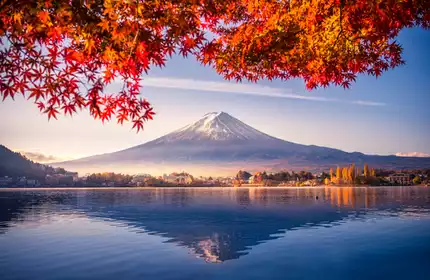
Of course, spring is famous for cherry blossom, which peaks in most areas in late March and early April. Plus, Fuji will still have its iconic snow dusting at this time of year. Come a little earlier – in late February or early March – and you can enjoy a quieter side of Japan, with the equally beautiful plum blossoms.
Alternatively, May is a lovely time to travel once the Golden Week holiday period has ended, with warm weather and fresh green scenery, not to mention the May Sumo Tournament on select departures of Japan Uncovered, Gems of Japan & Shikoku, or Off-beat Japan. Of course, if you’re not travelling in spring, we have sumo tournament opportunities in September and November too!
Summer is the season for festivals, fireworks and lively evening celebrations, especially on Honshu. It’s also the perfect time to visit Japan’s far northern island of Hokkaido, when you can see flower-strewn hills and spot brown bears hunting along the coast.
Autumn brings cooler temperatures and spectacular red and gold foliage, especially in late October and throughout November. Autumn leaves are getting a little later (and harder to predict) every year. Don’t forget that the leaves will turn a bit earlier in mountain towns compared to southern cities like Hiroshima, so pack layers and enjoy the variety!