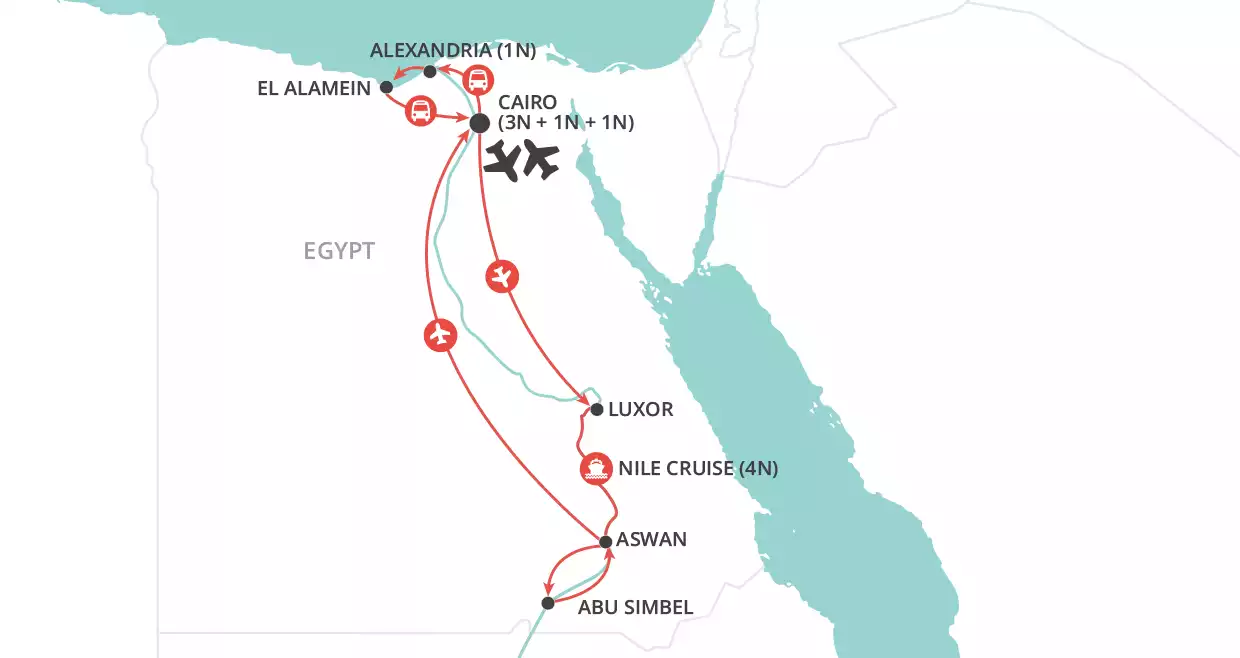
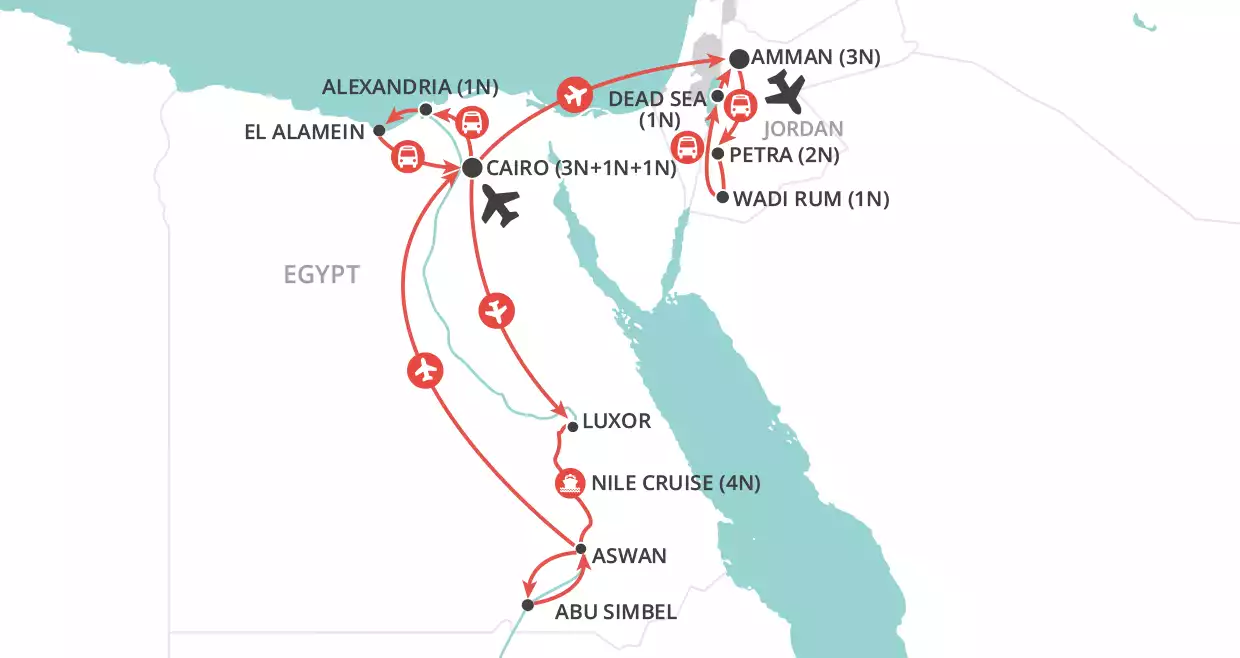
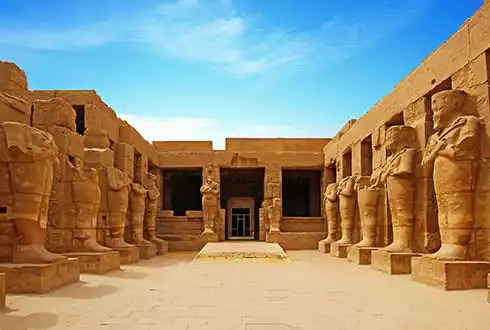
Sat on the east bank of the River Nile, Luxor has risen over and around one of Ancient
Egypt’s greatest cities, Thebes. The centre of the civilisation at its most rich and powerful (between 16
th and 11
th centuries BC), what remains of some of Thebes’ most triumphant sites is what makes Luxor so special.
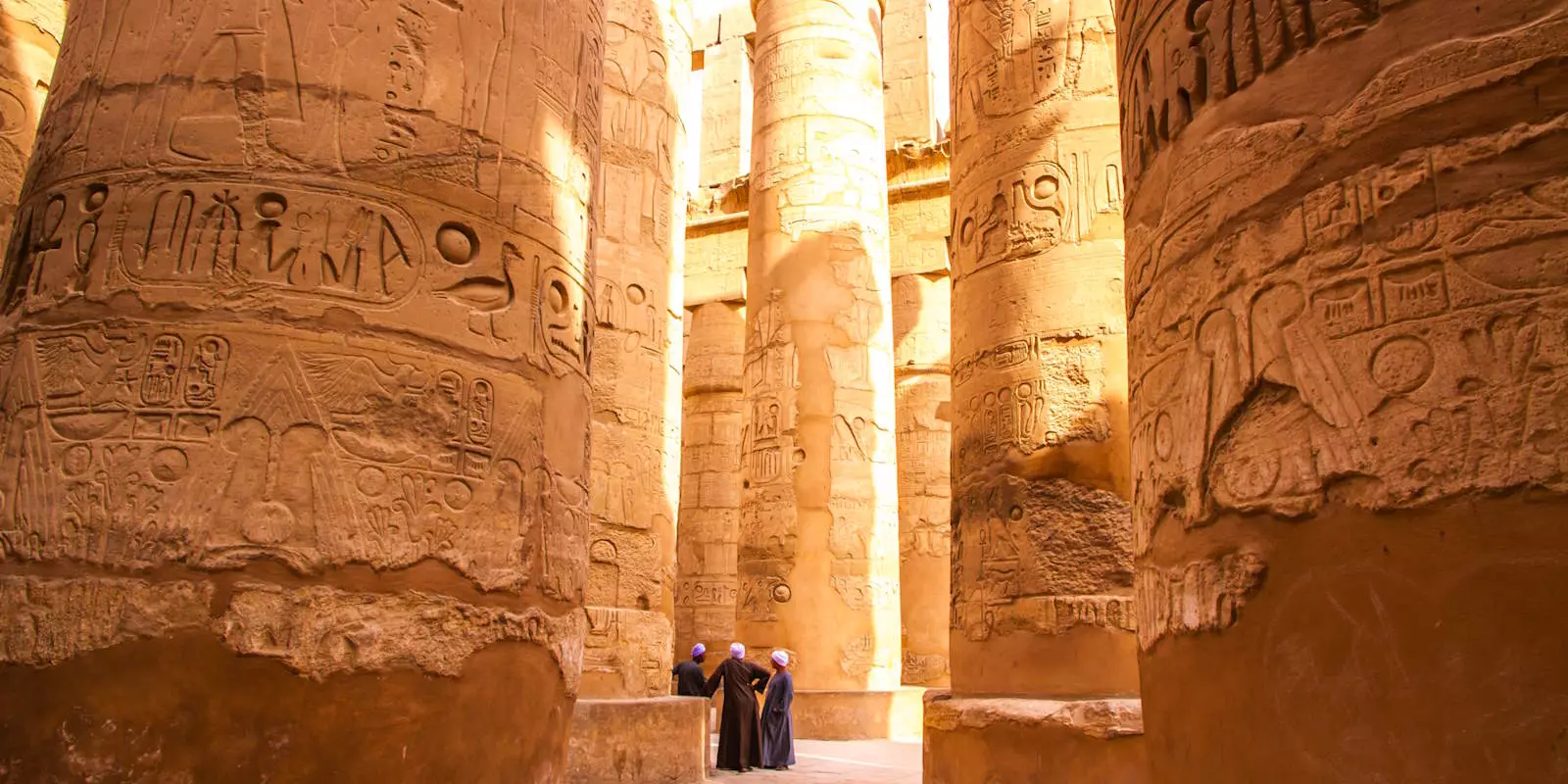
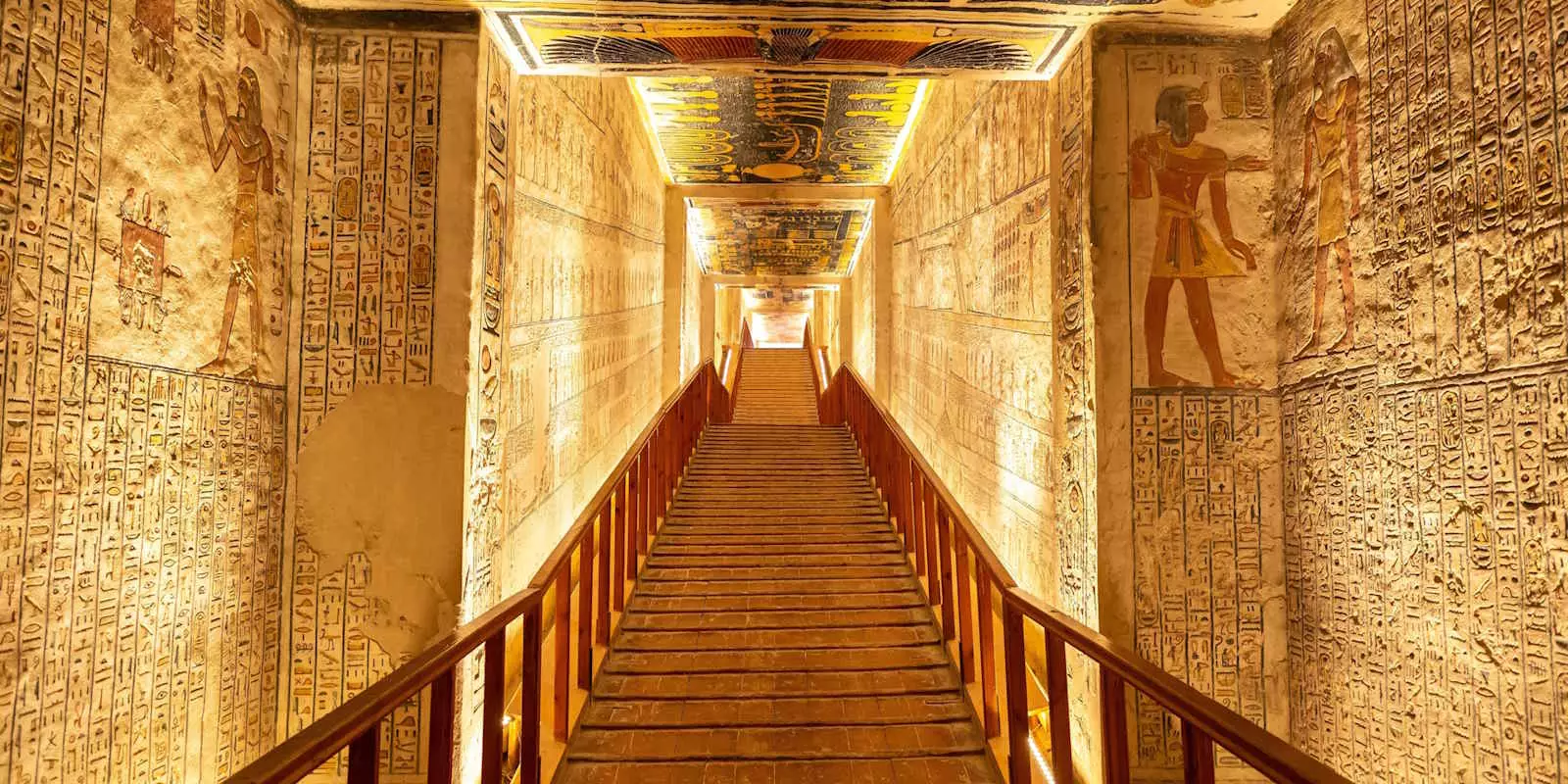
Luxor’s moniker, ‘world’s greatest open-air museum’, is well-earned; around a third of all ancient monuments can be found here. Their scale and grandeur is extraordinary, in many cases their painted colours still vivid, their enchantments palpable. On the east bank, where the sun rises and Thebes sat, was the City of the Living – today you’ll find the temple complexes of Luxor and Karnak, dedicated to Amun-Ra, ‘King of the Gods’, on this side of the river. On the opposite bank, the west side of the river where the sun sets, was the City of the Dead, a necropolis of the pharaohs. Crossing over the river today allows you to explore the
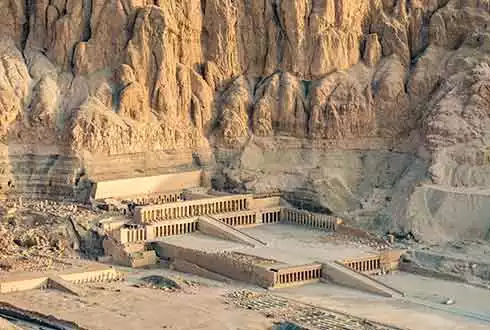
Valley of the Kings, the Valley of the Queens and mortuary temples like that of
Hatshepsut.
For ancient history lovers and dabblers alike, there is nothing in the world that compares to exploring Luxor – it is almost unfathomable that some of the monuments that you are visiting are over 4,000 years old, which only adds to Luxor’s mystery and allure.